
Technology

The Strategic Management Society is entering the final phase of a large scale technology project that has been underway for the last few years. SMS Members and other audiences will…

Strategic Management of Fault Lines, Contradictions, and Divergences
Firms that have their roots in selling non-physical digital products, also known as “born digital firms,” can establish an international presence without ever physically setting foot in another country. But…
This paper was nominated for a Concurrences Antitrust Writing Award. In January, the Justice Department sued Google, claiming the tech company abused a monopoly in online advertising by seizing control of…
By J Katherine Bahr Transformative technology has remade global business structures time and time again. With the Industrial Revolution, dispersed cottage industries became centralized production hubs. In the 20th century, communication…
Recent research published in the Global Strategy Journal, coauthored by Esther Tippmann (National University of Ireland Galway), Sinéad Monaghan (Trinity College Dublin) and Becky Reuber (University of Toronto), shows that…
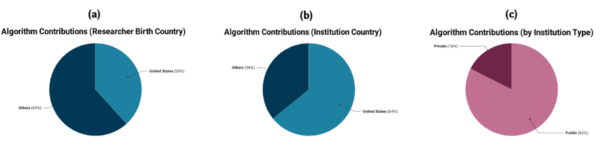
Modern enterprises rely on computing power improvements and better algorithms to tackle sophisticated problems and boost productivity. Some high-level algorithms are well known (e.g., Google’s PageRank), but until recently little was known about progress in the fundamental algorithms that underpin much of computing or about their discoverers. Our research finds that U.S. universities and corporations have been the most important contributors to algorithms improvement, potentially providing an important stepping-stone for U.S. enterprises to gain competitive advantage.
By Sen Chai and Richard Freeman In a world of ever-expanding knowledge where research has become increasingly complex, scientific funding ever so uncertain, and where frontier-pushing research requires labor to…