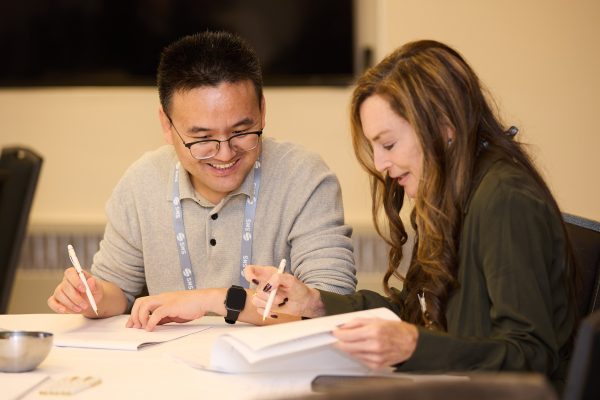
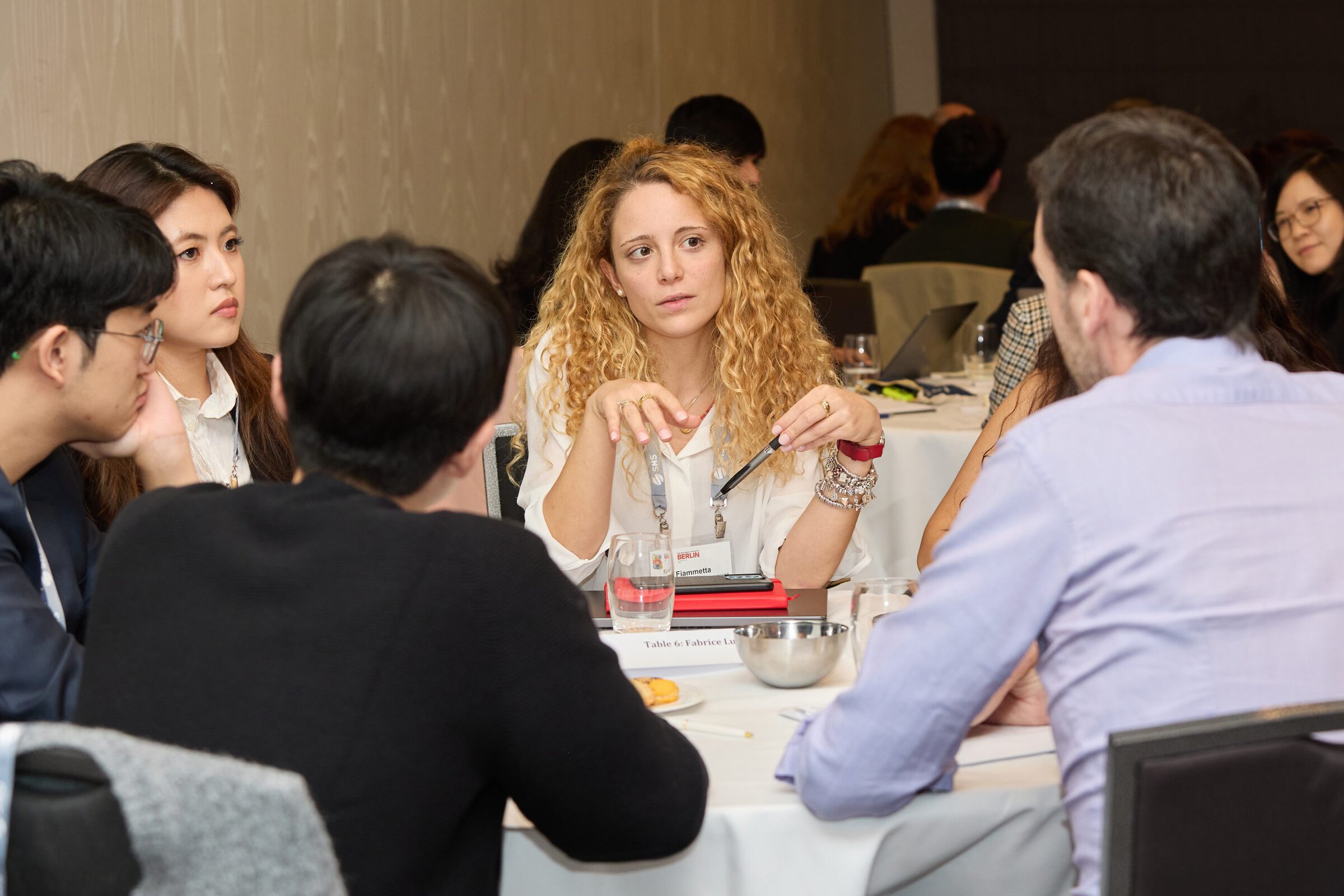
The SMS 46th Annual Conference was held October 17–20, 2026, in Berlin, Germany, bringing together 1,506 registrants and making SMS Berlin the largest annual conference in SMS history. Hosted at the InterContinental Berlin, the conference gathered scholars, practitioners, and students in a city whose own history speaks to division and reconnection. Berlin was a fitting setting for this year’s theme, Strategy in a Fragmented Geo-Economic Landscape: Bridging Divides Across Markets, Institutions, and Technology, which invited participants to examine how firms compete and collaborate as markets, institutions, and technologies pull in different directions.
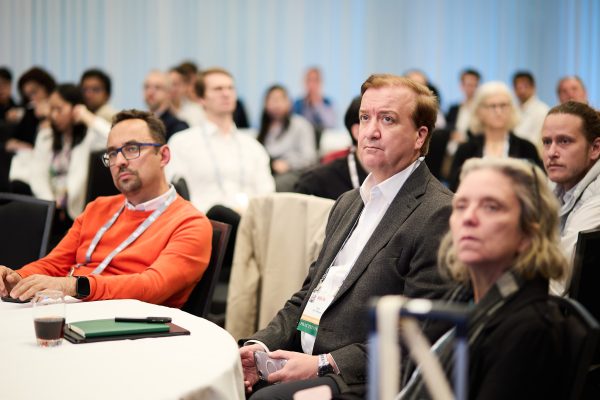
The call for proposals drew 2,014 submissions, the most ever received for an SMS Annual Conference. The program featured 118 Paper Sessions, 58 Common Ground Sessions, 23 Parallel Panel Sessions, 17 Saturday Workshops, and 42 IG&C Panel Sessions. The program was shaped by Program Co-Chairs Sabine Baumann (HWR Berlin), Henry Sauermann (ESMT Berlin), and Rafael Laguna de la Vera (Director, Federal Agency for Breakthrough Innovation SPRIND), whose combined academic and policy perspectives reflected the conference’s commitment to bridging scholarship and practice.
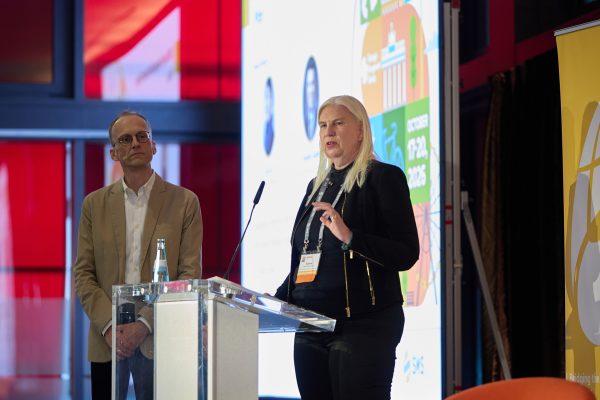
Four plenary sessions brought the conference theme to the main stage. The opening plenary, Switching Perspectives: What Do Global Developments Mean for the Field of Strategy?, turned the theme inward, as Giada Di Stefano, Nan Jia, Jasjit Singh, and Yanbo Wang, moderated by Henry Sauermann, considered what fragmentation means for how strategy scholars conduct research, build community, and train the next generation. On Monday morning, Startup Strategy and Entrepreneurship Policy: From Blueprints to Diversity? asked whether Silicon Valley and DARPA will remain the templates for innovation ecosystems, with Isabelle Canu, Carolin Haeussler, Scott Stern, and Andreas Zaby in conversation with moderator Ariel Dora Stern.
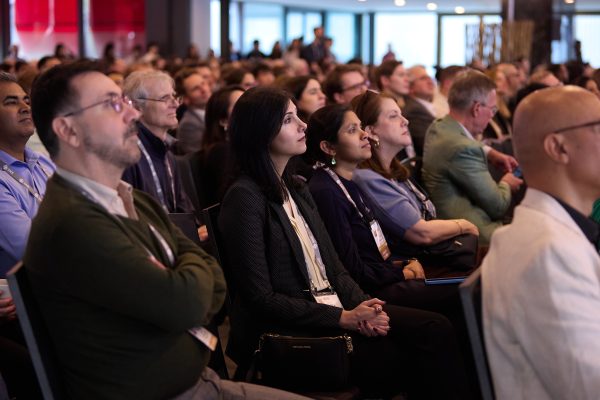
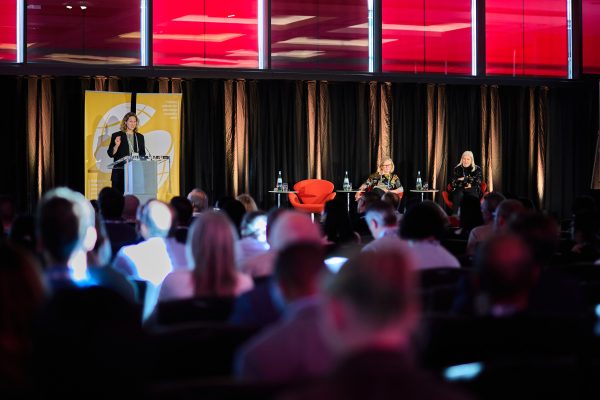
Monday afternoon brought something new to the SMS stage: an arts-based plenary, When an Agent Runs the Show: Lessons from AI-Managed Art Production. Johanna Neuschäffer, co-founder of Berlin’s OFFICE IMPART, presented Jonas Lund’s exhibition Performance Review, in which an autonomous AI agent directed human assistants, managed the budget, and evaluated their artwork. She was joined by Gillian Doyle and Sabine Baumann to explore authorship, creative value, and competitive advantage when everyone has access to the same tools. The final plenary, Strategy in Business and Defense in an Uncertain World, was a fireside chat between Admiral Sascha Helge Rackwitz, Commandant of the Bundeswehr Command and Staff College, and Rafaela Kraus of the University of the Bundeswehr Munich, on what business and military strategy can learn from one another about leading under uncertainty.
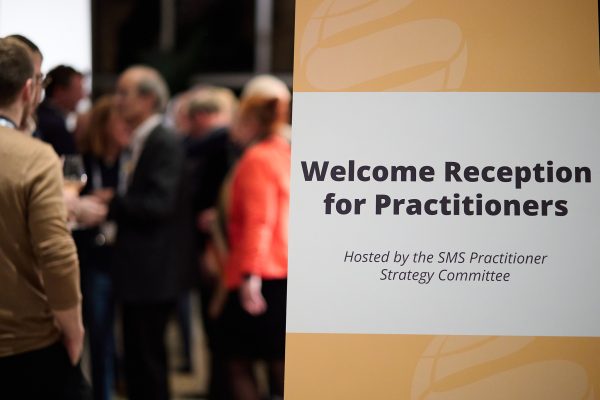
SMS continued to strengthen its programming for practitioners. The Big Six Business Insights Collection returned for its fourth year, offering curated sessions that connect leading strategy research with the questions executives and advisors face in practice. This year also marked a first for SMS: a Practitioner Welcome Reception on Saturday, giving practitioner attendees a dedicated opportunity to meet one another, connect with scholars, and begin the conference as part of a growing community at the intersection of reflective practice and thoughtful scholarship.
Each evening offered attendees the chance to reconnect with colleagues and build new relationships. The conference opened Saturday with the Awards Recognition and Welcome Reception, sponsored by Cornell SC Johnson College of Business and Surrey Business School. On Sunday, members gathered with their Interest Groups and Communities at the IG&C Socials, sponsored by the University of Bath School of Management. Monday’s evening event was held in the Large Orangerie at Charlottenburg Palace, a Baroque masterpiece completed in 1712 that offered a quintessential Berlin experience. The conference concluded Tuesday with a Closing Reception, a final opportunity to share reflections before attendees headed home. SMS extends its sincere thanks to all of this year’s conference sponsors: Cambridge University Press, The Case Center, Cesim, Cornell SC Johnson College of Business, Elsevier, McGraw Hill, The PhD Project, Surrey Business School, University of Bath School of Management, and Wiley.
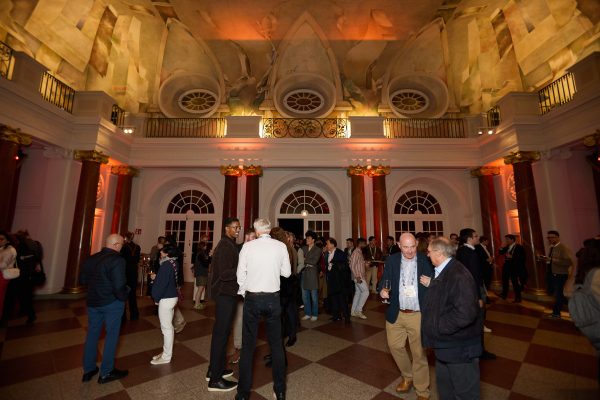
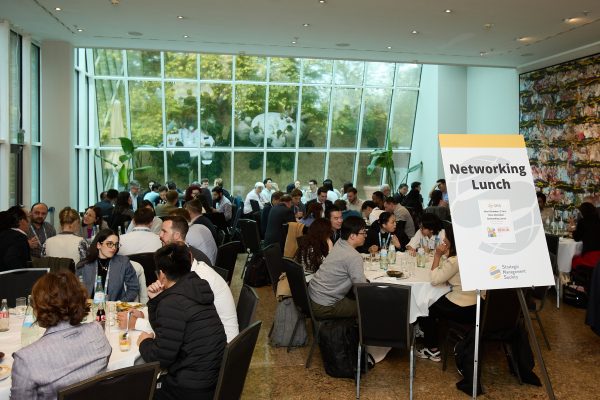
Hosted networking lunches created space for more focused conversations throughout the conference. These included the New Members/First-Time Attendees Networking Lunch hosted by the SMS Membership Committee, the Women’s Networking Lunch, the Meet the Fellows Networking Lunch, and the PhD Student Circle LIVE Networking Lunch.
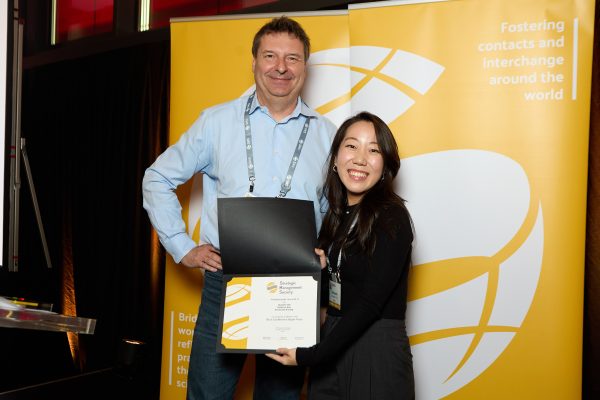
Awards and Honors were announced and celebrated throughout the event. The conference opened with a toast to SMS Award and journal prize winners during the Welcome Reception, and Conference Paper Prize recipients were recognized by the Program Chairs at the first Plenary Session. Congratulations to the winners of the SMS Annual Conference Best Paper Prize, Hyunjin Kim, Dahyeon Kim, and Rembrand Koning, for their paper “Reimagining the Firm with AI.”
With record registration and submissions, the 46th Annual Conference in Berlin showed that the strategy community remains deeply connected, even as the world it studies grows more fragmented. Across plenaries, sessions, and receptions, scholars, practitioners, and students came together to bridge divides of discipline, geography, and perspective, reaffirming SMS’s mission of bringing together the worlds of reflective practice and thoughtful scholarship.