
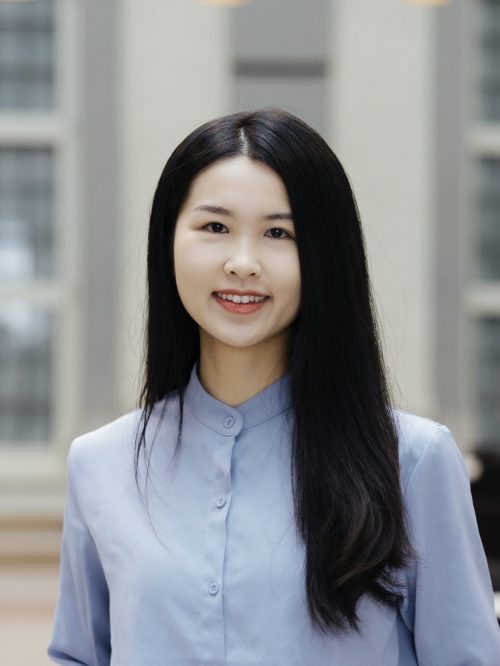
Huiyi Litan of Renmin University of China was a recipient of the 2025 Early Career Research Grant program. Learn more about Huiyi’s work:
What is your research question/topic?
I study how open-source developer communities create an often-invisible infrastructure of coordination—a “people layer” of interdependence that links projects through shared contributors. My research asks when these cross-project developer ties amplify spillovers and recombination, and when they help ecosystems remain resilient as technologies and communities evolve.
What are you hoping to accomplish through your research?
My goal is to build a micro-founded and measurable view of ecosystems that complements firm- and technology-centered accounts. I aim to theorize developer networks as a distinct coordination infrastructure—one that operates across organizational boundaries and beyond designed technical interfaces. Empirically, I will use large-scale GitHub traces to map how this infrastructure forms and shifts over time, and to examine how it shapes coordination, knowledge spillovers, and ecosystem resilience in emerging-technology domains.
What impact could this research have more broadly on the field of strategic management?
This project contributes to strategic management by foregrounding the “people layer” as a core microfoundation of ecosystem strategy—an infrastructure that enables interdependence, coordination, and recombination when control is diffuse. It also offers a scalable way to observe ecosystem formation and adaptation in real time, using developer ties as a tractable proxy for how capabilities and practices move across communities. More broadly, it opens a path to studying resilience and boundary-spanning in emerging-technology ecosystems where neither firm boundaries nor technical architectures fully explain how collective innovation holds together.
What SMS resources (members, workshops, events, etc.) were helpful to you during the application process?
Feedback from the SMS Annual Conference—especially the conversations around the paper development sessions—was instrumental in sharpening our framing and clarifying the core mechanism. SMS webinars also provided timely inspiration, and discussions with fellow SMS members helped me pressure-test the idea and position its contribution to ecosystem strategy.
Who inspires you the most to do this work? (whether that is professionally or personally).
Professionally, I’m inspired by work that makes interdependence in innovation ecosystems analytically tractable and strategically actionable. I also draw on economic perspectives on open-source collaboration and technology sharing. Personally, I’m most inspired by the open-source developer community itself: thousands of individuals coordinating without hierarchy to build shared infrastructure. Their quiet, cumulative contributions motivate me to uncover the micro-foundations of how collective innovation holds together.