
About the event

Organizations today operate in an era of intertwined geopolitical and technological disruption. Rivalry over critical resources, advanced technologies, and industrial leadership is accelerating fragmentation, with tensions emerging even among traditional allies, while middle powers increasingly pursue strategic autonomy and economic sovereignty. The evolving order is shaped not only by U.S.–China rivalry but also by the actions of these middle powers. Through industrial policy, coalition building, and economic diversification, these countries are actively shaping the rules and partnerships that will help define the next phase of economic development and globalization.
At the same time, rapid technological change is transforming companies and competitive dynamics. Artificial intelligence and other advanced technologies are reshaping how firms innovate, organize work, make decisions, and compete. Rather than being a neutral driver of productivity, technological change has become a primary arena for geopolitical contestation. Governments increasingly view advanced technologies as strategic assets tied to sovereignty and influence. As a result, global coordination on ethics, standards, and regulation has fractured, while countries simultaneously promote domestic technological capabilities and national champions.
These developments carry profound implications for strategic management. Foundational questions in strategy, from how firms compete and innovate to how they organize, are being stress-tested against these new realities. More broadly, these shifts challenge the boundaries of our existing theories: Are they sufficient to explain firm behavior when the market logic of efficiency coexists with, or is sometimes subordinated to, the state logic of security? Does efficiency-based strategy hold in sectors where national security considerations are important? How do policies aimed at technological leadership and economic security reshape firm strategy, innovation, and international expansion?
The conference location in Vancouver, British Columbia, provides an ideal setting for these conversations. As Canada’s gateway to the Asia-Pacific and a major hub for trade, port infrastructure, resource industries, and clean energy innovation, Vancouver reflects many of the strategic challenges facing firms today—from supply chain resilience and infrastructure development to economic diversification, sustainability, and resource governance. This is a critical moment for strategic management scholarship to contribute to broader discussions about how organizations navigate and influence the evolving global order.
Submission System Opens
Mid-DECEMBER, 2026
Submission Deadline for Proposals
FEBRUARY 24, 2027
Notification of Acceptance Decisions; Registration Opens
MID-APRIL, 2027
Presenter Registration Deadline
MAY 19, 2027
Conference Program Available Online
July 2027
SMS Annual Conference
October 16 - 19, 2027
Hotel & Travel
Conference Venue:
Sheraton Vancouver Wall Center
1000 Burrard St, Vancouver, BC V6Z 2S5, Canada
A block of discounted rooms at the conference hotel will be available starting April 2027 on a first-come, first-served basis.

Conference program chairs

Benjamin L. Hallen
University of Washington
Ben Hallen is the Neal and Jan Dempsey Endowed Professor in Strategy and Entrepreneurship at the Foster School of Business at the University of Washington. A former entrepreneur, his research focuses on the acceleration and scaling of businesses – especially in technology settings. He is currently an associate editor at Strategic Management Journal. For his teaching, he has been named by Poets & Quants as one of “Best 40 Under 40 Professors” amongst global MBA faculty and has received the “Dean’s Award for Excellence in Graduate Teaching” at Foster. At Foster he helped launch the MS in Entrepreneurship and the Creative Destruction Lab course. He earned a BS in Electrical Engineering and a masters in computer science from the University of Virginia, and a PhD in Management Science and Engineering from Stanford University, where he previously served on the advisory board of Stanford Technologies Venture Program.
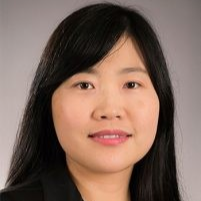
Jing Li
Simon Fraser University
Jing Li is a Professor of International Business and holds the Canada Research Chair in Global Investment Strategy at the Beedie School of Business, Simon Fraser University. She received her BA in Economics from Peking University and PhD in Business from Indiana University. Jing has studied international investment strategies of firms, emerging markets, state-owned enterprises, and the intersection of geopolitics, public policies, and firm strategies. She has published in leading business journals including Journal of International Business Studies, Journal of International Business Policy, Journal of Management Studies, and Strategic Management Journal, among others. Jing is equally passionate about teaching and engaging in activities that promote dialogue and collaboration among researchers, business leaders, and policymakers.

Marvin Washington
Simon Fraser University
Dr. Marvin Washington is most known as a Pracademic (practicing academic). Dr. Washington has written three books focused on leadership, strategy, and organizational change. His most recent book is, Lead Self First Before Leading Others with Stephen Hacker at Business Expert Press. Over the past 25 years, Dr. Washington has worked with a wide array of organizations, including, Parkland Fuels, Syncrude, SportChek, the Country of Botswana, the state of Oregon, AHS, and the Government of Alberta on topics of leadership, organizational change, and diversity, equity, inclusion and social justice. Since October 1, 2025 Dr. Washington is dean of the Beedie School of Business at Simon Fraser University. Prior to that he had senior roles at the University of Alberta and Portland State University with additional academic stops at the University of Iowa and Texas Tech University.

Tamara Vrooman
President and Chief Executive Officer, Vancouver International Airport
Tamara Vrooman is an award-winning leader, known for her exemplary track record leading large, complex institutions in both the private and public sectors and her bold positions on sustainability and inclusion. Prior to joining YVR as President & CEO, she served for nine years on YVR’s Board and for 13 years as the President & CEO of Vancity, Canada’s largest community credit union, transforming the business into a global reference point for values-based banking. Tamara was the former chair of the Canada Infrastructure Bank and the Rick Hansen Foundation. She currently serves as Simon Fraser University’s 12th Chancellor, and Chair of the Board for the Canadian Airports Council. Ms. Vrooman received the Order of British Columbia in recognition of her community and business leadership, has been named the recipient of the Canadian Chamber of Commerce - Canadian Business Leader of the Year Award.
call for proposals
Organizations today operate in an era of intertwined geopolitical and technological disruption. Rivalry over critical resources, advanced technologies, and industrial leadership is accelerating fragmentation, with tensions emerging even among traditional allies, while middle powers increasingly pursue strategic autonomy and economic sovereignty. The evolving order is shaped not only by U.S.–China rivalry but also by the actions of these middle powers. Through industrial policy, coalition building, and economic diversification, these countries are actively shaping the rules and partnerships that will help define the next phase of economic development and globalization.
At the same time, rapid technological change is transforming companies and competitive dynamics. Artificial intelligence and other advanced technologies are reshaping how firms innovate, organize work, make decisions, and compete. Rather than being a neutral driver of productivity, technological change has become a primary arena for geopolitical contestation. Governments increasingly view advanced technologies as strategic assets tied to sovereignty and influence. As a result, global coordination on ethics, standards, and regulation has fractured, while countries simultaneously promote domestic technological capabilities and national champions.
These developments carry profound implications for strategic management. Foundational questions in strategy, from how firms compete and innovate to how they organize, are being stress-tested against these new realities. More broadly, these shifts challenge the boundaries of our existing theories: Are they sufficient to explain firm behavior when the market logic of efficiency coexists with, or is sometimes subordinated to, the state logic of security? Does efficiency-based strategy hold in sectors where national security considerations are important? How do policies aimed at technological leadership and economic security reshape firm strategy, innovation, and international expansion?
We therefore invite theoretical, empirical, and practitioner-oriented submissions that advance our understanding of strategic management under conditions of geopolitical and technological transformation. We welcome contributions examining how firms respond to geopolitical tensions, state intervention, and technological disruption. We are particularly interested in proposals examining how firms and corporate leaders help reshape the norms that govern business and strategy. While U.S.–China dynamics are vital, we especially welcome contributions on the strategies of firms operating within or across middle powers and emerging blocs. How do firms in these contexts actively shape business norms rather than simply adapt to fragmentation created by larger powers? How do they diversify beyond traditional economic relationships and identify opportunities in new markets and regions? How do they compete, innovate, and catch up in advanced technologies dominated by leading firms and major powers?
We are interested in these dynamics across sectors of growing geopolitical and economic importance. While advanced technologies remain central, we strongly encourage proposals in other strategic sectors, including critical infrastructure, transportation, clean energy, advanced manufacturing, and critical minerals, that underpin economic security, national competitiveness, and the energy transition.
The conference location in Vancouver, British Columbia, provides an ideal setting for these conversations. As Canada’s gateway to the Asia-Pacific and a major hub for trade, port infrastructure, resource industries, and clean energy innovation, Vancouver reflects many of the strategic challenges facing firms today—from supply chain resilience and infrastructure development to economic diversification, sustainability, and resource governance. This is a critical moment for strategic management scholarship to contribute to broader discussions about how organizations navigate and influence the evolving global order.
Conference Tracks
Conference Theme Tracks
Interest Group Tracks
Community Tracks
Sponsorship
Opportunities
More than 1,000 attendees from around the world will participate in sessions with scholars presenting their cutting-edge research, keynote speeches, practitioner panels, and workshops, as well as a variety of networking events. Being a sponsor or exhibitor at the SMS Annual Conference builds visibility for your company or university and connects you with educators and leaders in the field.
Frequently asked questions
Whether you are new to SMS Conferences or have attended many, you’ll find useful information to help you prepare for your conference experience in the FAQ. Be sure to check back, as this content is updated as new information becomes available.